Ask how much caffeine is in cold brew and you will get a different answer depending on which page you land on, and the gap is not small. Starbucks discloses 205mg for a Grande cold brew in stores. Its own bottled version, sold in grocery stores, comes in at 180mg for a smaller 11oz bottle. A lab study out of Thomas Jefferson University measured cold brew concentrate at up to 1,230mg per litre before dilution. Meanwhile, a typical coffee blog will tell you cold brew has “150 to 300mg per 12oz cup,” a range wide enough to cover almost every number above it. None of these sources is lying. They are measuring different things and calling it the same drink. Here is what we found when we pulled the actual pages, and how the numbers reconcile.
Where the published numbers actually land
Starting with what brands themselves disclose. Starbucks’ own nutrition information lists 155mg of caffeine for a Tall (12oz) in-store cold brew, 205mg for a Grande (16oz), 310mg for a Venti iced (24oz), and 360mg for a Trenta. The bottled retail version sold through grocery, a separate product with its own recipe and testing, lists 180mg per 11oz bottle, sourced from Starbucks’ own beverage facts data. High Brew Coffee’s Triple Shot Black, an 11oz ready-to-drink can, states 225mg of natural caffeine directly on its own product listing.
Then there is the academic side. Megan Fuller and Niny Rao, chemists at Thomas Jefferson University, brewed cold brew coffee under controlled lab conditions and measured caffeine concentration using standard analytical chemistry, publishing their results in Scientific Reports. Their equilibrium readings, taken once extraction had levelled off, ranged from 930mg per litre for a dark roast with a medium grind up to 1,230mg per litre for a medium roast with a coarse grind. That is undiluted concentrate, not a finished, drinkable cup.
And then there is the blog layer, which is where most people actually go looking for this answer. My Home Barista’s guide states flatly that “cold brew typically contains 150 to 300mg of caffeine per 12oz serving,” a single sentence that manages to be technically defensible and almost useless at the same time, because it spans everything from a modest Starbucks Tall to nearly triple that amount, without telling you which cold brew it is describing.
Four sources, four very different-sounding numbers, and every one of them is accurate for what it actually measured.
Concentrate vs ready-to-drink
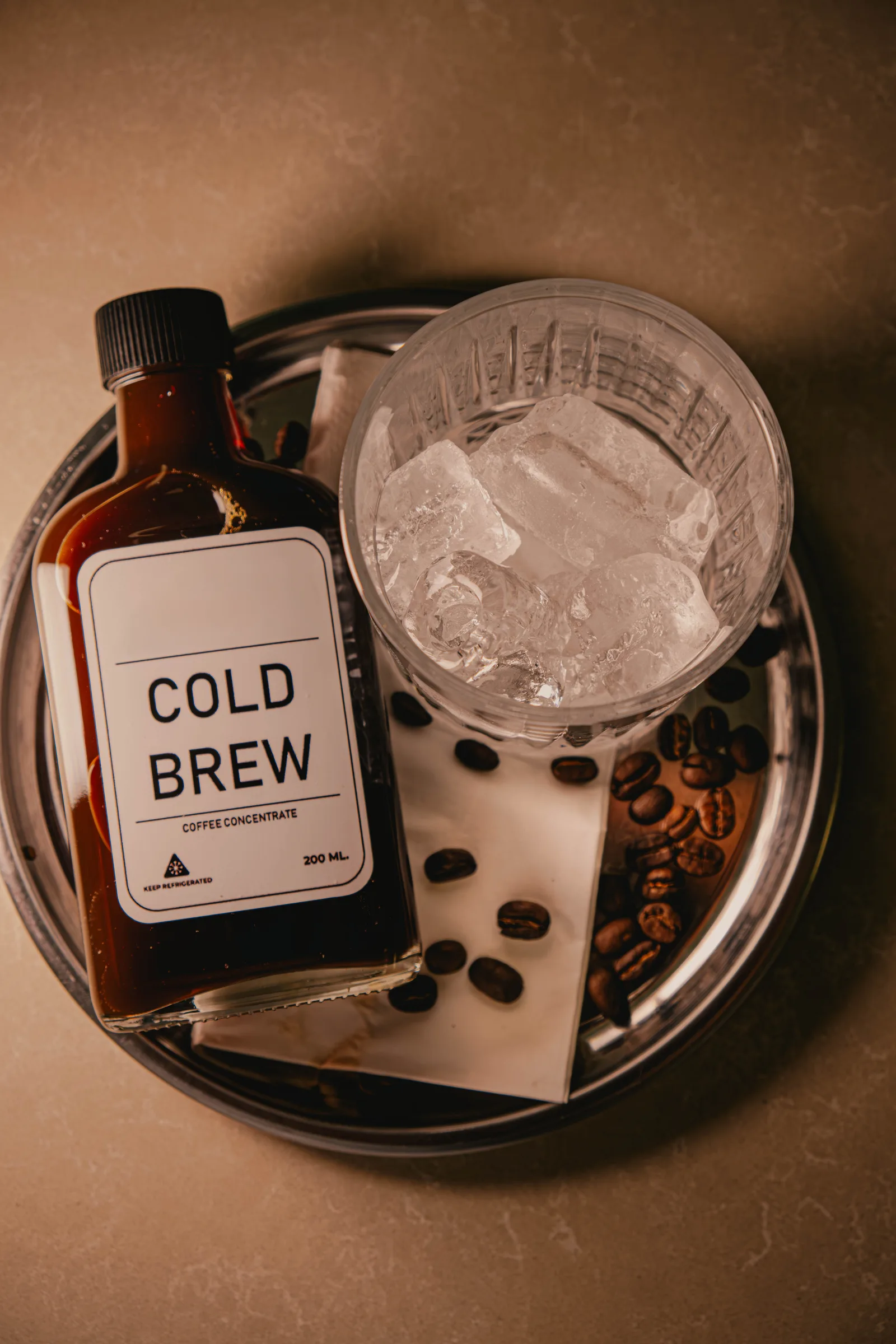
This is the single biggest source of confusion, and it is baked into the word “cold brew” itself. The Thomas Jefferson University figures, 930 to 1,230mg per litre, describe undiluted concentrate: coffee steeped at a strong ratio and then measured before anyone adds water. Home cold brew is typically made at something like a 1:4 to 1:8 coffee-to-water ratio and then diluted again, often 1:1, before it is actually drunk. A brand-disclosed number like Starbucks’ 205mg Grande, by contrast, describes the finished, ready-to-drink beverage as it lands in your hand. Comparing the academic concentrate figure directly against a brand’s finished-drink figure is comparing two different beverages that both happen to be called “cold brew,” and it is exactly how a headline ends up claiming cold brew has three times the caffeine of drip coffee. It can, if you drink it undiluted. Almost nobody does.
Steep time and ratio
Popular advice insists on steeping cold brew for 12 to 24 hours, often framed as though every extra hour meaningfully adds more caffeine. The Thomas Jefferson University data says otherwise: caffeine and chlorogenic acid concentrations followed first-order kinetics and reached equilibrium between roughly 6 and 7 hours, not 10 to 24. Past that point, additional steep time changes body, texture, and bitterness far more than it changes caffeine content. A batch steeped for 24 hours and one steeped for 7 hours would show close to the same caffeine reading in a lab, despite what most brewing guides imply.
Roast and grind still matter, though, and by more than people expect. Across the study’s four combinations, equilibrium concentration swung from 930mg per litre (dark roast, medium grind) to 1,230mg per litre (medium roast, coarse grind), a roughly 30% spread between two batches that were both “correctly” cold brewed. That is before dilution ratio enters the picture at all.
Serving-size games
Brands are not required to serve cold brew in comparable volumes, and they don’t. An 11oz can, a 12oz “tall,” a 16oz “grande,” and a 24oz “venti” are all real serving sizes you can buy today, chosen for menu and shelf convenience rather than for letting you compare products head to head. Look at raw milligram figures and Starbucks’ 205mg Grande sounds like more caffeine than its own 180mg bottled version. Normalise both to the same volume and the bottled version is actually the more concentrated drink per 100ml, not the weaker one. Almost no public-facing source does this normalisation, which is exactly why bigger-sounding numbers get repeated as though “more milligrams” always means “stronger coffee.”
Measurement method
Brand-disclosed figures come from regulatory nutrition testing tied to a fixed, mass-produced recipe, batch-tested and reported the same way any packaged food discloses its nutrition facts. Academic figures come from HPLC, high-performance liquid chromatography, the gold-standard method for quantifying caffeine precisely, but run on researcher-brewed samples at whatever ratio and steep time the study designed, not on any product you can actually buy. Blog figures are frequently neither: many are aggregated or estimated from other blogs rather than tested at all, a pattern sometimes called citogenesis, where a number gets repeated enough times across enough sites that it starts to look verified purely through repetition. That is a reasonable explanation for why blog ranges cluster into suspiciously round, wide bands like “150 to 300mg” instead of a specific, sourced figure.
The reconciliation table
Normalising every figure above to milligrams per 100ml makes the disagreement much easier to see, and to resolve.
| Source | Type | Serving | Caffeine | mg per 100ml |
|---|---|---|---|---|
| Starbucks, in-store Grande | Brand disclosure | 16 fl oz (473ml) | 205mg | 43mg |
| Starbucks Bottled Cold Brew | Brand disclosure, RTD | 11 fl oz (325ml) | 180mg | 55mg |
| High Brew Triple Shot Black | Brand disclosure, RTD | 11 fl oz (325ml) | 225mg | 69mg |
| Fuller & Rao, Thomas Jefferson University | Academic lab analysis, concentrate | 1 litre, equilibrium | 930 to 1,230mg | 93 to 123mg |
| Typical blog claim | Unverified aggregation | 12 fl oz (355ml) | 150 to 300mg | 42 to 85mg |
Laid out this way, the brand-disclosed numbers and the blog range actually agree reasonably well, clustering between roughly 42mg and 69mg per 100ml. The outlier is the academic figure, and it is an outlier for a clear, explainable reason: it is concentrate, not a finished drink.
Our reconciled range
If “cold brew” means what most people are actually holding when they say the word, a cup from a coffee shop or a bottle off a grocery shelf, the reconciled range is roughly 40 to 70mg of caffeine per 100ml, or about 155 to 310mg in a typical 11 to 24oz serving. That band is not a guess; it is where every brand-disclosed figure we pulled directly from Starbucks’ and High Brew’s own labels actually sits, and it is consistent with the middle of the commonly repeated blog range too.
If “cold brew” instead means the undiluted concentrate a home brewer pulls out of the fridge before adding any water, expect something closer to 90 to 125mg per 100ml, matching the Thomas Jefferson University lab data almost exactly. That is genuinely 2 to 3 times stronger than any finished serving in the table above, and it is very likely the number behind most “cold brew has insane caffeine” claims you have seen, quietly describing the concentrate while everyone reading assumes it means the cup.
Common questions
Is cold brew actually stronger than hot drip coffee? Per 100ml of finished, diluted beverage, cold brew and drip coffee land in a broadly similar 40 to 70mg per 100ml band once serving size is accounted for. Cold brew’s reputation for hitting harder mostly comes from people drinking undiluted concentrate or oversized ready-to-drink cans, not from the brewing method itself extracting dramatically more caffeine ounce for ounce than a hot brew does.
Does a longer steep time mean more caffeine? Only up to a point, and a fairly early one. Lab data shows caffeine extraction reaching equilibrium around 6 to 7 hours. Steeping for 24 hours instead of 8 changes flavour, body, and bitterness considerably, but it does very little to the actual caffeine count once that early equilibrium point has passed.
Why do two brands of cold brew have such different caffeine content? Because every brand chooses its own bean, roast, brew ratio, and can or bottle size, and none of them are obligated to normalise to a shared serving size. A 225mg 11oz can and a 180mg 11oz bottle are both accurate figures; they are simply two different recipes brewed to two different strengths, sold at the same volume.
Want the full interactive breakdown, searchable by brand and serving size? Try our caffeine calculator. For more reconciled, sourced coffee data like this in your inbox, join The Sunday Pour.
Sources & data
- Caffeine Informer: Caffeine in Starbucks Cold Brew
- Caffeine Informer: Caffeine in Starbucks Bottled Cold Brew
- Amazon: High Brew Coffee Triple Shot Black, product listing and label
- Fuller & Rao, Scientific Reports: The Effect of Time, Roasting Temperature, and Grind Size on Caffeine and Chlorogenic Acid Concentrations in Cold Brew Coffee
- My Home Barista: Cold Brew Caffeine, How Much Is Actually in Your Cup?