This site’s Starbucks brewed coffee breakdown covers Pike Place, Blonde, and Dark Roast by size, and the cold brew reconciliation piece sorts out why cold brew numbers disagree so wildly across brands, but neither one mentions Nitro Cold Brew, the version poured straight from a tap without ice. That is a real gap, because Nitro is not just a texture gimmick. A Grande Nitro Cold Brew carries more caffeine per fluid ounce than a Grande of Starbucks’ own regular iced cold brew, made from the exact same 20-hour steep, and Starbucks caps Nitro at Grande specifically because a full Venti pour would push a single cup close to the FDA’s entire daily caffeine guidance. Between the numbers by size, the reason the size cap exists, and the gap between the cafe pour and the retail can of the same name, there is more going on here than a simple lookup table.
The official numbers: nitro by size and sweetener
Starbucks’ own nutrition data, as cited by Caffeine Informer, lists Nitro Cold Brew in two sizes and two versions:
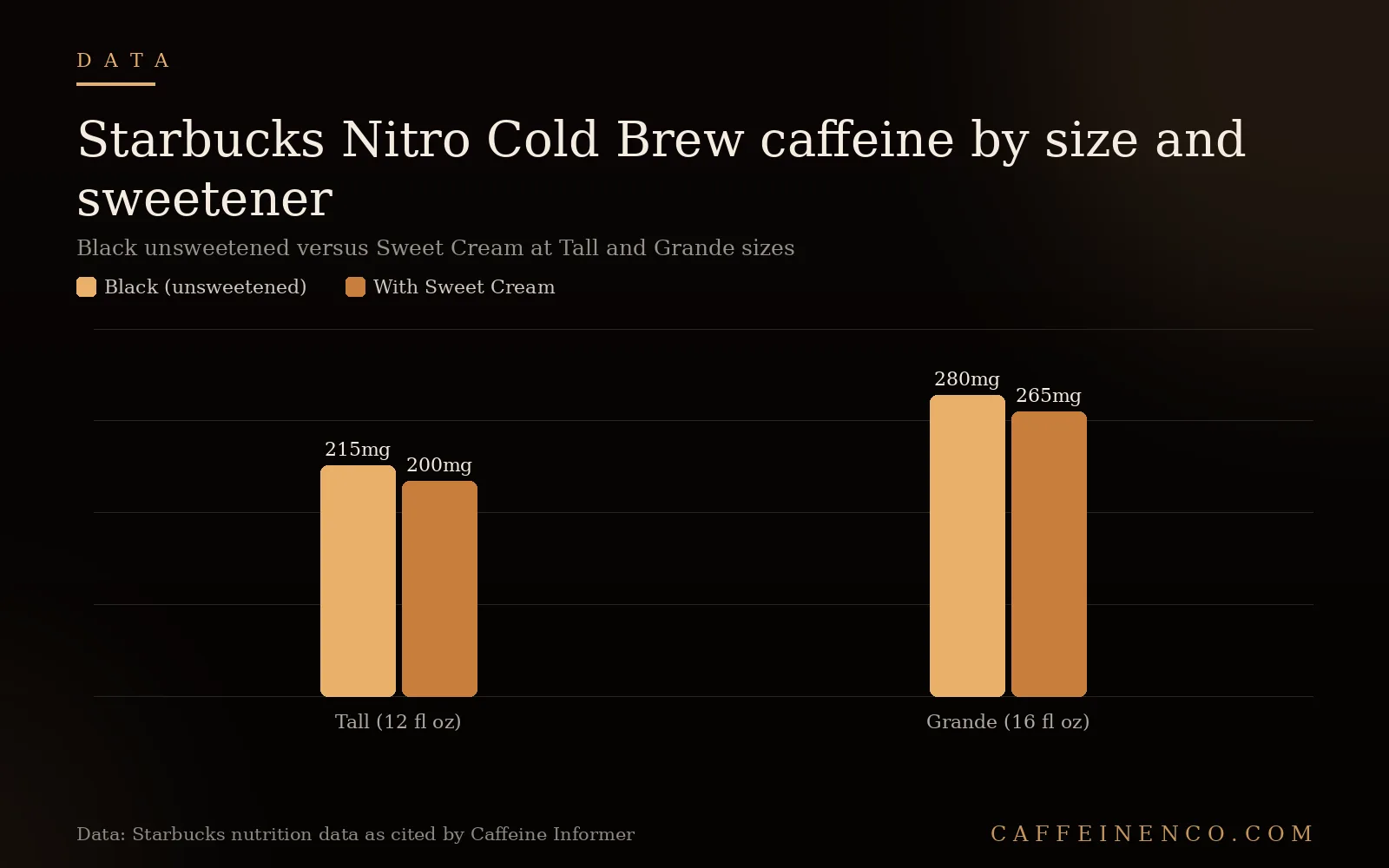
| Size | Black (unsweetened) | With Sweet Cream |
|---|---|---|
| Tall (12 fl oz) | 215mg | 200mg |
| Grande (16 fl oz) | 280mg | 265mg |
Sweet Cream runs 15mg lighter than Black at both sizes, a consistent gap rather than a proportional one. Starbucks does not explain the mechanism in its published nutrition data, but a fixed 15mg difference at two different sizes reads more like a fixed volume of cream displacing coffee in the cup than like the cream diluting the caffeine already in the drink, since a proportional dilution would produce a bigger gap at the bigger size rather than the same one. That is a reasonable inference from the pattern in the numbers, not a mechanism Starbucks itself states.
Caffeine Informer’s own per-ounce math for the Black Grande puts the figure at “17.50 mg of caffeine for every fl oz,” a number worth holding onto, because it is the whole reason the rest of this page exists.
Why serving it without ice makes nitro the stronger pour
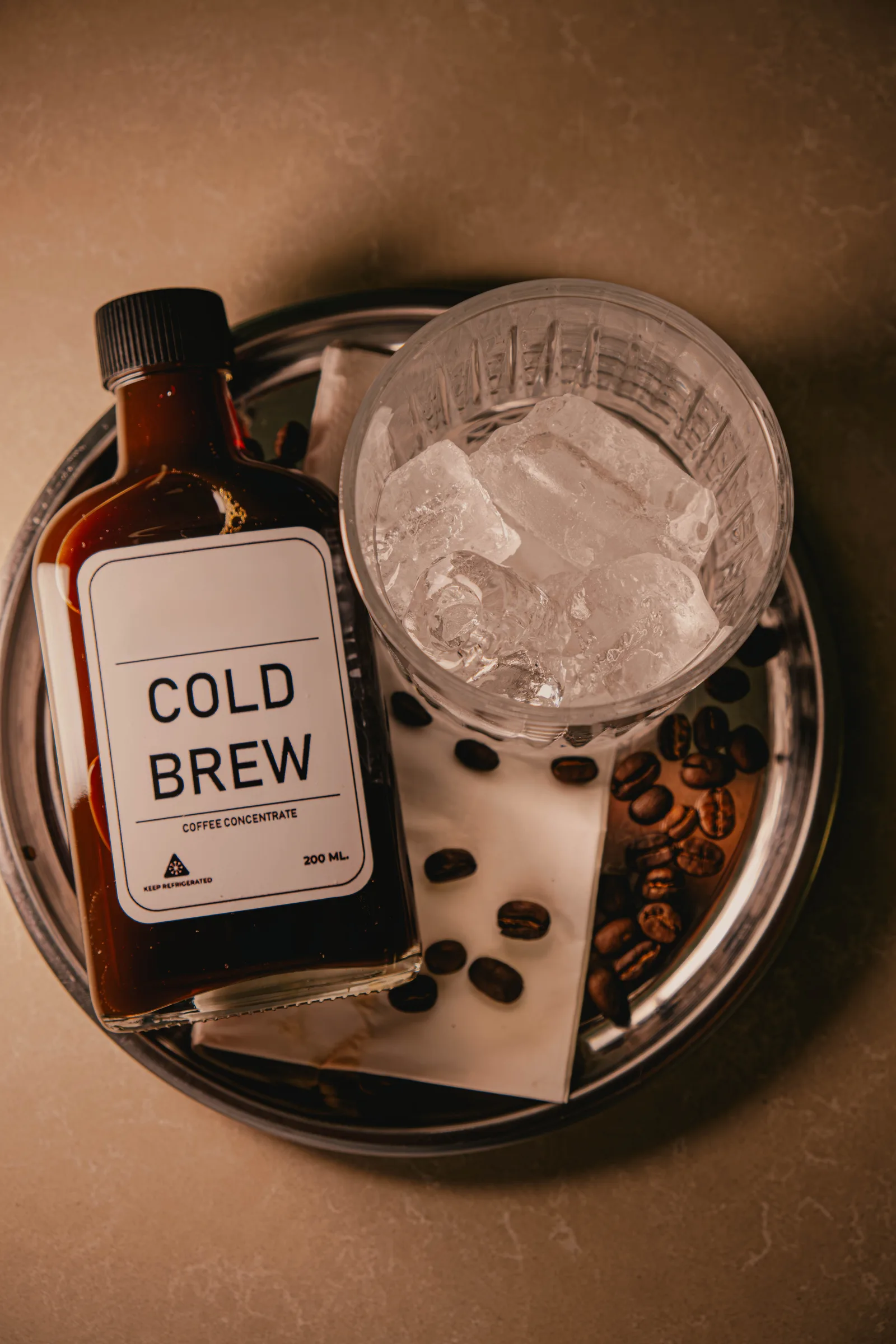
Nitro Cold Brew and regular iced Cold Brew start from the identical base. Both are steeped the same way, for about 20 hours using cold water and coarsely ground beans, per Caffeine Informer’s sourcing from Starbucks’ own cold brew page. The difference is entirely in how the finished drink reaches the cup. Regular Cold Brew is poured over a full cup of ice, so part of every size is frozen water rather than coffee. Nitro is charged with nitrogen and served straight, no ice at all, so the whole cup is coffee.
That single difference in serving method is enough to make Nitro meaningfully stronger per ounce than regular Cold Brew at every matching size:
| Size | Regular Cold Brew | Nitro Cold Brew (Black) |
|---|---|---|
| Tall (12 fl oz) | 155mg (about 12.9mg/fl oz) | 215mg (about 17.9mg/fl oz) |
| Grande (16 fl oz) | 205mg (about 12.8mg/fl oz) | 280mg (about 17.5mg/fl oz) |
A Grande Nitro is about 37 percent stronger per ounce than a Grande regular Cold Brew, despite coming from the same steeped batch. Anyone assuming Nitro’s smoother, creamier mouthfeel means a gentler drink has the relationship backwards: the smoother texture comes from nitrogen bubbles, not from any dilution, and the missing ice actually concentrates the caffeine rather than cutting it.
The no-venti rule: why Starbucks caps nitro at grande

Nitro Cold Brew is only sold at Tall and Grande in the US. Venti is not offered, and the popular explanation, that nitrogen tap pressure only works at smaller pour volumes, is not what Tasting Table found when it looked into the size cap directly. The outlet’s own calculation states plainly: “If Starbucks were to sell the Nitro Cold Brew in a venti size, which is 24 fluid ounces in the cold cups, one drink would pack a whopping 430 milligrams of caffeine.” Tasting Table ties that number to a specific limit: “The FDA lists the maximum amount of caffeine that is safe for adults to consume in a day as 400 milligrams,” a figure MD Anderson Cancer Center also cites as the FDA’s general guidance for healthy adults. A Venti Nitro would exceed that guidance in one single cup, before counting anything else a person drinks that day.
Tasting Table goes further and connects the decision to a real, recent precedent: “After Panera Bread had to discontinue its caffeinated Charged Lemonades due to several lawsuits, Starbucks is probably making the right call.” That connection is the outlet’s own read on Starbucks’ reasoning rather than something Starbucks has confirmed, but the underlying Panera facts are well documented. This site’s own Panera breakdown covers the same case: the Center for Science in the Public Interest reported Panera’s Charged Lemonade line ran 155 to 302mg of caffeine depending on size and flavor, and Panera pulled the product nationwide after lawsuits alleged it contributed to two deaths among people who did not realize how much caffeine they were drinking in what was marketed as a lemonade. Whether or not that specific case shaped Starbucks’ internal decision, the two situations share the same underlying math problem: a drink that reads as light and refreshing can still carry a genuinely large caffeine dose once you take the ice out of the equation.
Canned nitro vs cafe nitro: same name, different product
Starbucks also sells Nitro Cold Brew in cans at grocery retail, made and bottled through PepsiCo’s beverage partnership rather than poured at a store tap, and the numbers do not match the cafe version:
| Can | Size | Caffeine | Per fl oz |
|---|---|---|---|
| Nitro Cold Brew Black | 11 fl oz | 235mg | About 21.4mg |
| Black Unsweetened | 9.6 fl oz | 155mg | About 16.1mg |
| Dark Caramel | 9.6 fl oz | 155mg | About 16.1mg |
| Vanilla Sweet Cream | 9.6 fl oz | 110mg | About 11.5mg |
| Dark Cocoa Sweet Cream | 9.6 fl oz | 110mg | About 11.5mg |
The 11 fl oz can, at roughly 21.4mg per fluid ounce, is actually stronger per ounce than the cafe Grande’s 17.5mg. That mirrors a pattern this site’s own cold brew reconciliation piece already found with the non-nitro line: Starbucks’ in-store Grande Cold Brew runs 205mg while its bottled retail version is a separate, independently formulated product with its own number. The same holds for Nitro. A can bought off a grocery shelf and a cup poured at a Starbucks counter share a name and a nitrogen infusion, but they are not the same recipe, and the sweet cream cans in particular land noticeably lighter per ounce than the cafe’s sweet cream pour.
Worked example: hitting a caffeine target with nitro
- Start from the Grande Black baseline. At 280mg, a single Grande Nitro already covers 70 percent of the FDA’s general 400mg daily guidance, per MD Anderson Cancer Center, before you drink anything else that day.
- Drop to Tall for a lighter total dose, not a lighter pour. A Tall Black Nitro runs 215mg, about 17.9mg per fluid ounce, actually a touch stronger per ounce than the Grande’s 17.5mg. Sizing down cuts the total milligrams in the cup, not the concentration.
- Add Sweet Cream to shave off a fixed 15mg. Sweet Cream Tall (200mg) and Grande (265mg) both run exactly 15mg under their Black counterparts, per Starbucks’ own published figures, a small but real reduction rather than a meaningful dilution.
- Do not expect a Venti. Starbucks does not sell one, and per Tasting Table’s own math, a 24oz pour at Nitro’s concentration would land around 430mg, over the FDA’s daily guidance in a single cup.
- Watch the can, not just the cup, when buying retail. The 11oz can at 235mg runs stronger per ounce than the cafe Grande, while the 9.6oz sweet cream cans run notably weaker per ounce than the cafe’s sweet cream pour, so a grocery run is not a reliable stand-in for a cafe order.
- If you want to try nitro-style cold brew at home, the concentrate itself still starts with a normal steep, 1st in Coffee’s French press range or a French press on Amazon works for the steeping step; the nitrogen infusion itself needs a separate charger-style nitro cold brew maker to actually replicate the tap texture.
How nitro stacks up against every other cold coffee this site has measured
Comparing cold coffee fairly means comparing caffeine per fluid ounce, since cup sizes and ice levels vary so much between drinks and chains.
| Drink | Size | Caffeine | Per fl oz |
|---|---|---|---|
| Starbucks Cold Brew (regular) | 16 fl oz | 205mg | About 12.8mg |
| Costa Cold Brew | Medium | 210mg | Not published in fl oz |
| Starbucks Nitro Cold Brew (Sweet Cream) | 16 fl oz | 265mg | About 16.6mg |
| Starbucks Nitro Cold Brew (Black) | 16 fl oz | 280mg | About 17.5mg |
| Starbucks Canned Nitro (Black, 11oz) | 11 fl oz | 235mg | About 21.4mg |
| Peet’s Cold Brew | 10.5 fl oz | 250mg | About 23.8mg |
Peet’s cold brew, covered in this site’s own Peet’s breakdown, edges out even the canned Nitro on a per-ounce basis, and Costa’s cold brew, from this site’s Costa breakdown, does not publish its sizes in fluid ounces, so it sits in the table by milligram total only. Nitro’s real position is in the middle of that pack: stronger than any iced or diluted cold brew, weaker than Peet’s undiluted pour, and nowhere near the extreme end of this site’s own Death Wish Coffee reconciliation, which puts a reconciled 59 to 61mg per fluid ounce on that brand’s regular hot-brewed coffee, not its cold brew (Death Wish’s Nitro Cold Brew cans were recalled in 2017 and the site’s own piece gives no caffeine figure for that product), roughly two and a half times even the strongest number on this table.
Common mistakes
Assuming Nitro is a gentler drink because it feels smoother is the most common mistake; the nitrogen infusion changes texture and mouthfeel, not caffeine content, and removing the ice that a regular iced Cold Brew depends on actually concentrates the dose. Assuming a Venti Nitro exists somewhere or will eventually be added is the second mistake; per Tasting Table’s own math, a 24oz pour at Nitro’s concentration would land near 430mg, over the FDA’s daily guidance cited by MD Anderson Cancer Center, which is a caffeine-safety ceiling rather than a nitrogen-tap limitation. Treating the retail can as identical to the cafe pour is the third mistake; the 11oz can runs stronger per ounce than a cafe Grande while the 9.6oz sweet cream cans run weaker than the cafe’s sweet cream version, since the canned line is a separate PepsiCo-bottled product. Assuming Sweet Cream meaningfully dilutes the coffee is the fourth mistake; the gap is a flat 15mg at both sizes Starbucks sells, not a percentage cut that grows with the cup.
Common questions
How much caffeine is in a Starbucks Nitro Cold Brew? 280mg in a Grande (16 fl oz) and 215mg in a Tall (12 fl oz), per Starbucks’ own nutrition data as cited by Caffeine Informer, both for the unsweetened Black version.
Why doesn’t Starbucks sell a Venti Nitro Cold Brew? Caffeine, not the nitrogen tap. Per Tasting Table’s own calculation, a 24oz Venti-size pour at Nitro’s concentration would carry around 430mg of caffeine, over the FDA’s 400mg daily guidance for healthy adults cited by MD Anderson Cancer Center, and Tasting Table connects the decision to lessons from Panera’s discontinued Charged Lemonade line.
Is Nitro Cold Brew stronger than regular Cold Brew? Yes, per fluid ounce. A Grande Nitro runs about 17.5mg of caffeine per fluid ounce against a Grande regular Cold Brew’s about 12.8mg, even though both are steeped the same way for about 20 hours, because Nitro skips the ice that dilutes the regular iced version.
Does Sweet Cream Nitro have less caffeine than Black Nitro? Slightly. Sweet Cream runs 15mg lower than Black at both Tall (200mg vs 215mg) and Grande (265mg vs 280mg), per Starbucks’ own figures, a fixed gap rather than a percentage reduction.
Is canned Nitro Cold Brew the same strength as the cafe version? No. The 11 fl oz can runs about 21.4mg of caffeine per fluid ounce, stronger than the cafe Grande’s 17.5mg, while the 9.6 fl oz sweet cream cans run about 11.5mg per fluid ounce, weaker than the cafe’s Sweet Cream pour, since the canned line is bottled separately through PepsiCo rather than poured in store.
How does Nitro Cold Brew compare to Peet’s or Costa cold brew? Peet’s cold brew runs stronger per ounce, about 23.8mg against Nitro’s 17.5mg, per this site’s own Peet’s breakdown. Costa’s cold brew sits at 210mg for a medium by milligram total, though Costa does not publish that size in fluid ounces for a direct per-ounce comparison.
For more sourced caffeine breakdowns like this one, delivered weekly, subscribe to The Sunday Pour.
Sources & data
- Caffeine Informer: Caffeine in Starbucks Nitro Cold Brew Coffee
- Caffeine Informer: Caffeine in Starbucks Canned Nitro Cold Brew
- Caffeine Informer: Caffeine in Starbucks Cold Brew Coffee
- Tasting Table: Why You Can't Order A Venti Starbucks Nitro Cold Brew
- CSPI: Panera to Stop Selling Charged Lemonade Following Lawsuits
- MD Anderson Cancer Center: How Much Caffeine Is Too Much?