You did everything the packaging told you to. Good beans, hot water, four minutes, plunge. And yet the bottom half of your cup looks like wet sand, tastes gritty against your teeth, and turns bitter and silty the longer it sits. That’s not a sign you’re bad at making coffee. It’s a predictable result of how a french press actually works, and it’s fixable with a handful of specific changes rather than a new gadget.
Why french press goes muddy in the first place
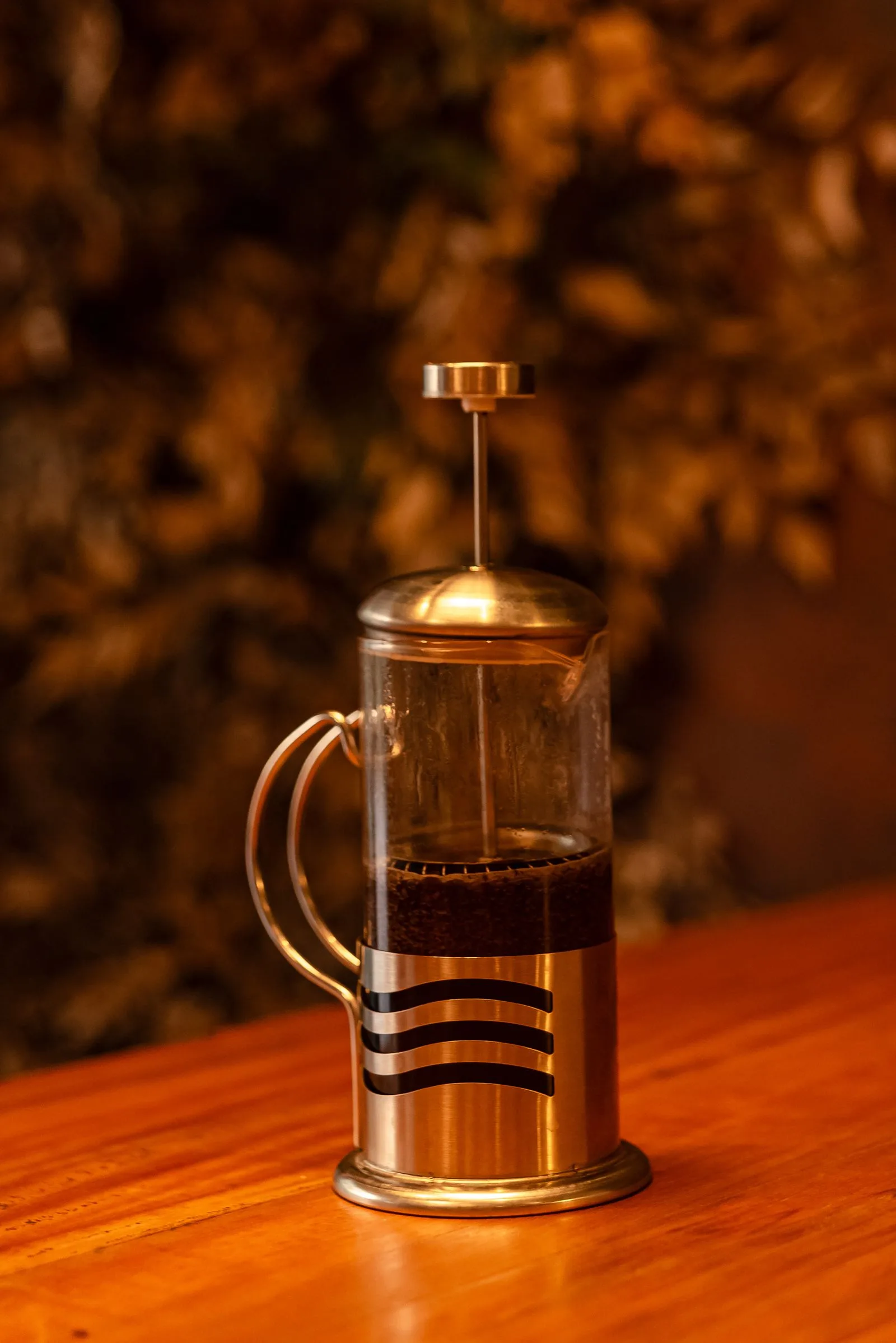
A french press is an immersion brewer: the grounds sit fully submerged in water for the entire brew, rather than water passing through them once like a pour over. That’s exactly what gives french press its full body and heavier mouthfeel, because oils and fine particles that a paper filter would trap stay in your cup. But it also means every gram of coffee in the pot has several minutes of contact time to shed tiny particles into the brew, and those particles need somewhere to go once you’re done steeping.
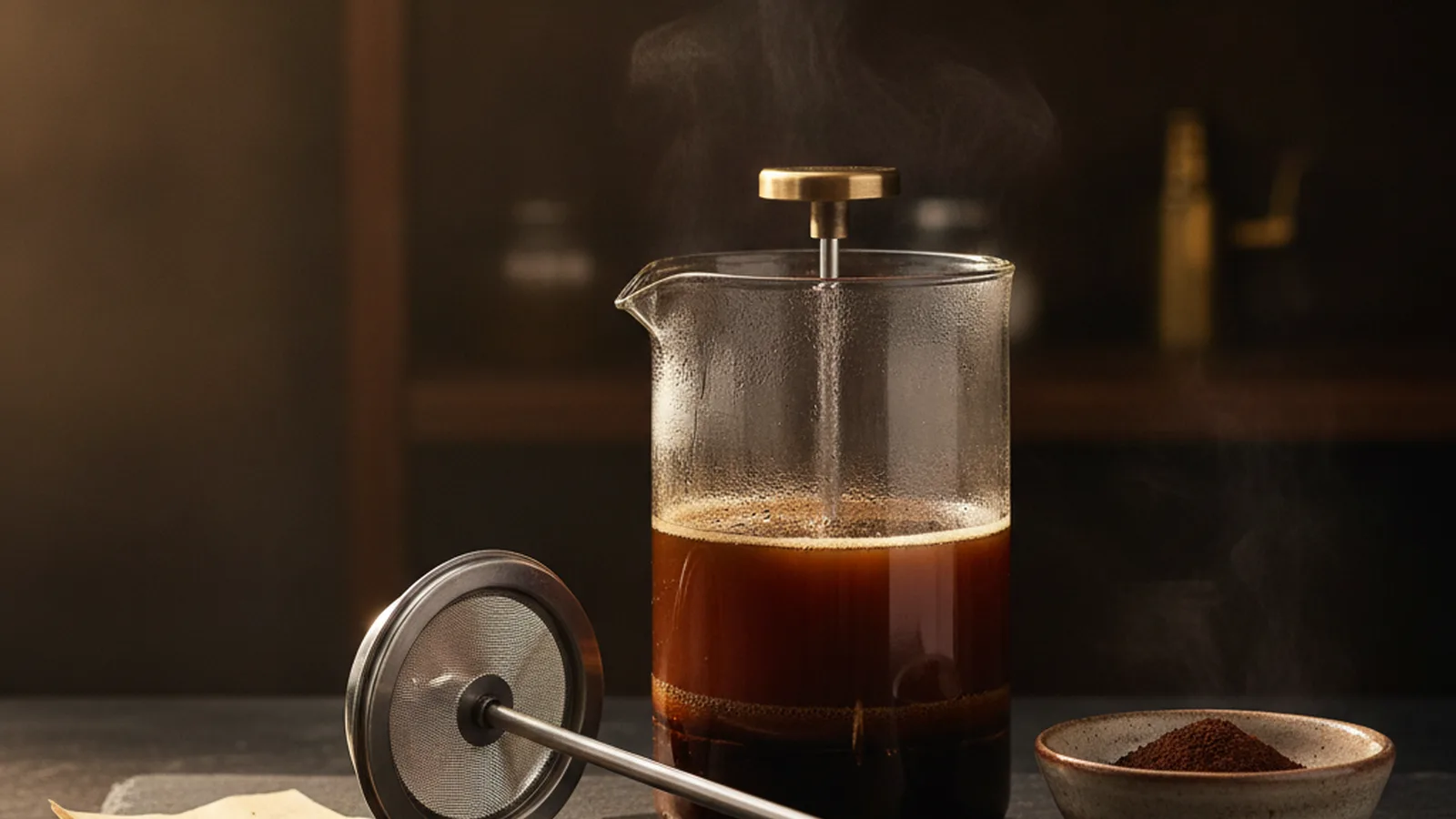
That’s where the metal mesh filter comes in, and it’s a genuinely different job than a paper filter does. Paper is fine enough to catch almost everything except dissolved flavour compounds and oils. Metal mesh is coarser by design, built to hold back the bulk of the grounds while still letting oils through, which is the entire point of brewing in a french press rather than a Chemex. The tradeoff is that metal mesh has real gaps, and if your grounds include a meaningful share of fine particles, dust sized fragments left over from grinding, those fines are small enough to slip through the mesh regardless of how gently you pour. A small amount of grit is simply part of the format. Muddy, sludgy, “chewing my coffee” territory means something upstream has gone wrong, and it’s almost always one of five things.
Your grind is too fine
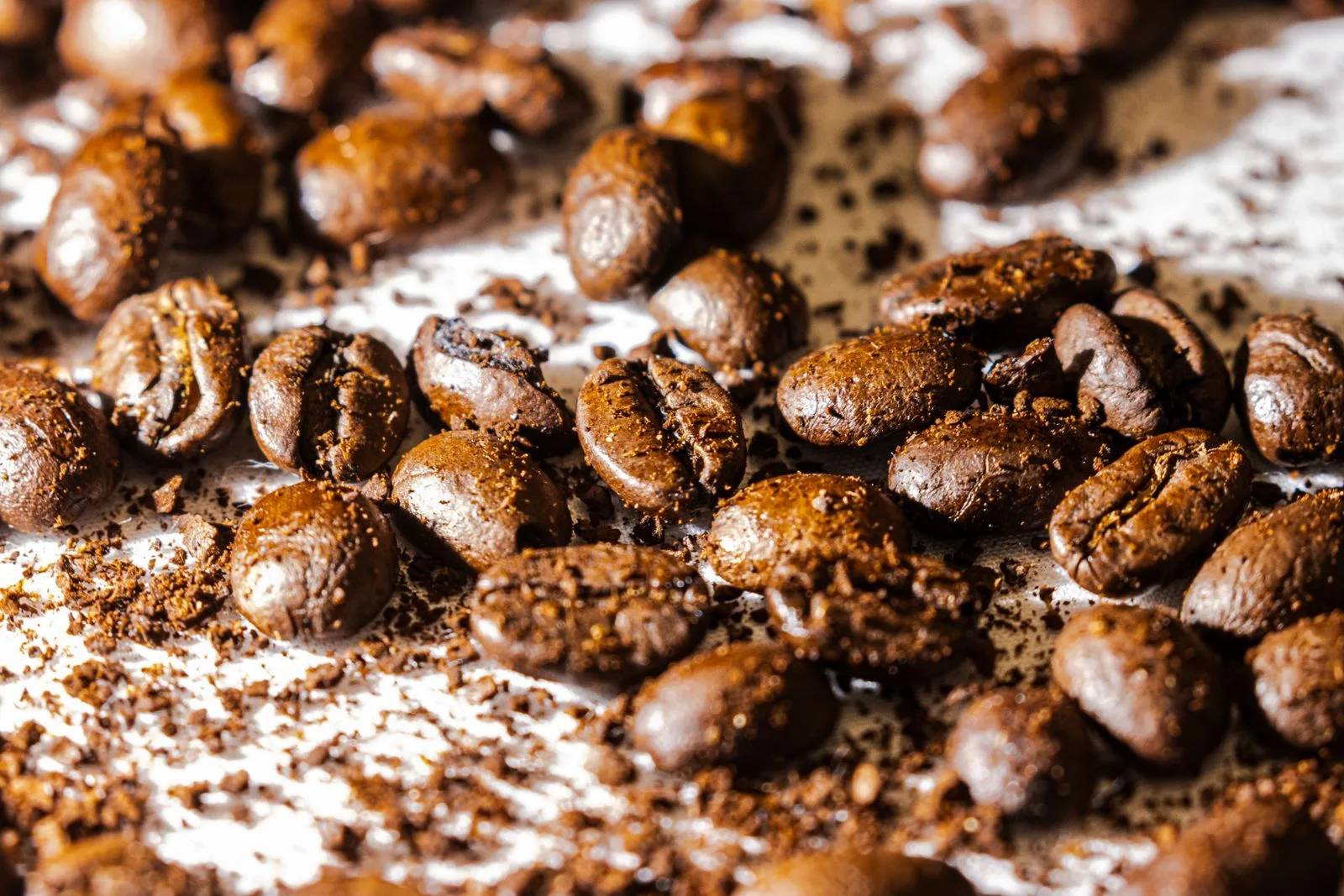
This is the dominant cause, by a wide margin. If you’re using pre ground supermarket coffee, it’s very likely ground for a drip machine, a texture closer to table salt than what a french press mesh can handle. Push a burr grinder to a French press setting and you should be aiming for something that looks and feels like coarse sea salt or raw sugar, distinctly chunkier than pour over grind, with visible individual particles rather than powder.
Two grinder related traps make this worse. Blade grinders chop unevenly rather than crush to a consistent size, so even if your average particle looks right, you’ll still get a wide spread that includes a meaningful tail of fine dust, and it’s that dust, not the coarse majority, that ends up in your cup. Dull burrs on an otherwise good grinder have the same effect: they crush inconsistently as the burrs wear, throwing off more fines than a sharp set would at the same setting. If you’ve had the same grinder for years and muddiness has crept in gradually rather than starting on day one, worn burrs are worth checking before you blame technique.
You’re stirring the crust the wrong way
After the initial pour, a “crust” of grounds forms and rises to the surface as gas escapes the beans. Most standard instructions tell you to break this crust with a stir around the four minute mark, but how you do it matters. An aggressive, swirling stir that churns the whole pot redistributes fine particles that had started to settle back into suspension throughout the liquid, working against you right before you plunge. A gentler approach, a few slow passes with a spoon just enough to break the surface crust and let trapped gas escape, does the same essential job without turning the entire pot back into a fines suspension.
You’re plunging too deep, too fast
Plunging is often treated as the extraction step, the moment the coffee actually “happens.” It isn’t. By the time you plunge, extraction is essentially done; the plunger’s only real job is separating grounds from liquid so you can pour. Treated that way, speed is the enemy. Pushing the plunger down quickly creates turbulence, and that turbulence forces fine particles through mesh gaps that would otherwise hold them back under calmer conditions, the same way a coarse sieve can hold back gravel at rest but lets small stones through when you shake it.
The fix is almost embarrassingly simple: press slowly, over 20 to 30 seconds, using the plunger’s weight rather than your arm to do the work. If you feel real resistance partway down, don’t force it. Resistance usually means the grind is too fine or the filter has picked up a clump; forcing through it is exactly the aggressive pressure that pushes fines through the mesh.
You’re skipping the two minute rest

Immediately after plunging, sediment that made it into the upper liquid hasn’t necessarily settled yet, and pouring straightaway carries whatever’s still suspended right into your cup. Giving the pot roughly 30 seconds to a couple of minutes to sit undisturbed after plunging lets the heavier particles sink back toward the bottom before you pour, meaningfully reducing what ends up in the cup, particularly in the later pours if you’re serving more than one person from the same pot.
The James Hoffmann no-plunge method
If the standard technique above still leaves you with more sediment than you’d like, there’s a more deliberate method worth knowing, developed and popularised by James Hoffmann, the 2007 World Barista Champion, in a widely watched brewing video. The insight behind it is the same one driving the fixes above, taken to its logical end: since plunging doesn’t extract flavour and mainly risks pushing fines through the mesh, why plunge hard at all.
The method runs like this. Pour 500g of water over 30g of coarsely ground coffee in about 10 seconds, then leave it completely undisturbed for roughly four minutes (230 seconds specifically, in Hoffmann’s original timing). At that point, stir the crust once to break it and release trapped gas, then use two spoons to scoop out the floating grounds and foam sitting on the surface rather than pushing them back down. Let the pot rest again, this time for five to eight minutes, giving the remaining grounds time to fully sink to the bottom under gravity alone rather than mechanical pressure. Only then do you place the plunger, and even then you don’t press it fully down: you lower it until it sits just below the surface of the liquid, using it as a lid and a light strainer rather than a piston, and pour gently from there. The final 30 to 50ml at the bottom of the pot, where the last of the sediment concentrates, gets left behind rather than poured into the cup.
It’s a slower process, closer to 10 to 12 minutes start to finish rather than four, and it asks for a bit more attention at two separate points instead of one plunge and pour. What you get back is a noticeably cleaner cup with less grit, while keeping much of the fuller body that makes people choose french press over a paper filtered method in the first place.
Decant immediately either way
Whichever method you use, don’t leave finished coffee sitting on the grounds in the press once it’s ready, even with the plunger down. A plunger only separates the bulk of the grounds; it doesn’t create a sealed barrier, and coffee left in contact with spent grounds keeps extracting slowly, edging the cup toward bitter and over extracted the longer it sits, while any residual fines continue settling unevenly. Pour the full batch into a carafe or straight into cups as soon as it’s ready, and treat the french press itself as a brewing vessel, not a serving one.
Standard method vs the Hoffmann method
| Standard method | Hoffmann no-plunge method | |
|---|---|---|
| Total time | About 4 minutes | About 10 to 12 minutes |
| Body | Full, classic french press weight | Full, slightly cleaner than standard |
| Clarity | Some sediment expected, more if grind or plunge technique is off | Noticeably clearer, closer to a heavy pour over |
| Effort | One stir, one plunge, one pour | Stir, scoop, second rest, gentle strain pour |
| Best for | Quick daily brewing once grind and technique are dialled in | When you want maximum clarity without switching brew methods |
| Forgiveness of grind errors | Low, fine particles go straight through under pressure | Higher, since gravity settling catches more than a fast plunge would |
Common questions
Is some sediment in french press coffee normal? Yes. Because the format uses a metal mesh rather than paper, a small amount of fine grit at the bottom of the cup is expected and part of what gives french press its characteristic body. The goal of everything above isn’t a completely sediment free cup, that’s what a paper filter method is for, it’s getting rid of the excessive, chewy, sludgy layer that signals something upstream went wrong.
Does a finer grind make french press coffee stronger, or just muddier? Mostly just muddier. Strength in immersion brewing comes primarily from your coffee to water ratio and brew time, not from grinding finer. A finer grind mainly increases surface area and extraction speed while also increasing the volume of fines small enough to pass the mesh, so you trade clarity for a strength gain you could have gotten more cleanly by adjusting ratio or steep time instead.
Can I fix muddy coffee after it’s already brewed? Only partially. Letting a finished brew rest for a minute or two before pouring, and leaving the last 30 to 50ml in the pot, will reduce what makes it into your cup. But you can’t remove sediment that’s already suspended in the liquid you’ve poured, so prevention at the grind, stir and plunge stage matters far more than any after the fact fix.
Do I need a different french press to fix this, or is it always technique? Filter condition matters more than most people expect. A mesh screen that’s torn, warped, or separated from its supporting frame will let far more through regardless of how careful your technique is, and mesh does wear over time with regular use. If you’ve corrected grind size and plunging technique and are still getting excessive sediment, inspect the filter assembly before assuming you need a new press entirely; a replacement filter is usually far cheaper than a new pot.
Is metal mesh worse than paper for french press specifically? Not worse, different by design. Paper filters strip out oils and most fine particles, which is why pour over and drip coffee taste lighter and cleaner. French press exists specifically to keep those oils and some body in the cup, and metal mesh is the mechanism that allows that, at the cost of letting some fines through. If you consistently prefer a completely clean, light cup, that’s a signal you might prefer a paper filtered method over french press generally, not a sign your technique is wrong.
For the full ratio, grind size and step by step brewing breakdown, see our french press brew guide.
For more brewing fixes like this one, delivered weekly, subscribe to The Sunday Pour.